PRONOUNS: HE/HIM | TOWN SIZE: UNDER 1,000
“We are social creatures and thrive with
strong supportive attachments. So, one of the main factors if someone develops PTSD is their perceived support. Do they feel supported and not isolated or alone? When we feel seen, heard, and valued, we thrive. We feel that even when bad things happen in life, it will be okay because we are not alone, and people will help us.”
According to a 2019 study by The Trevor Project, a nonprofit organization focused on suicide prevention among LGBTQ2S+ youth, an LGBTQ2S+ young person is 40% less likely to attempt suicide if they have at least one accepting adult.
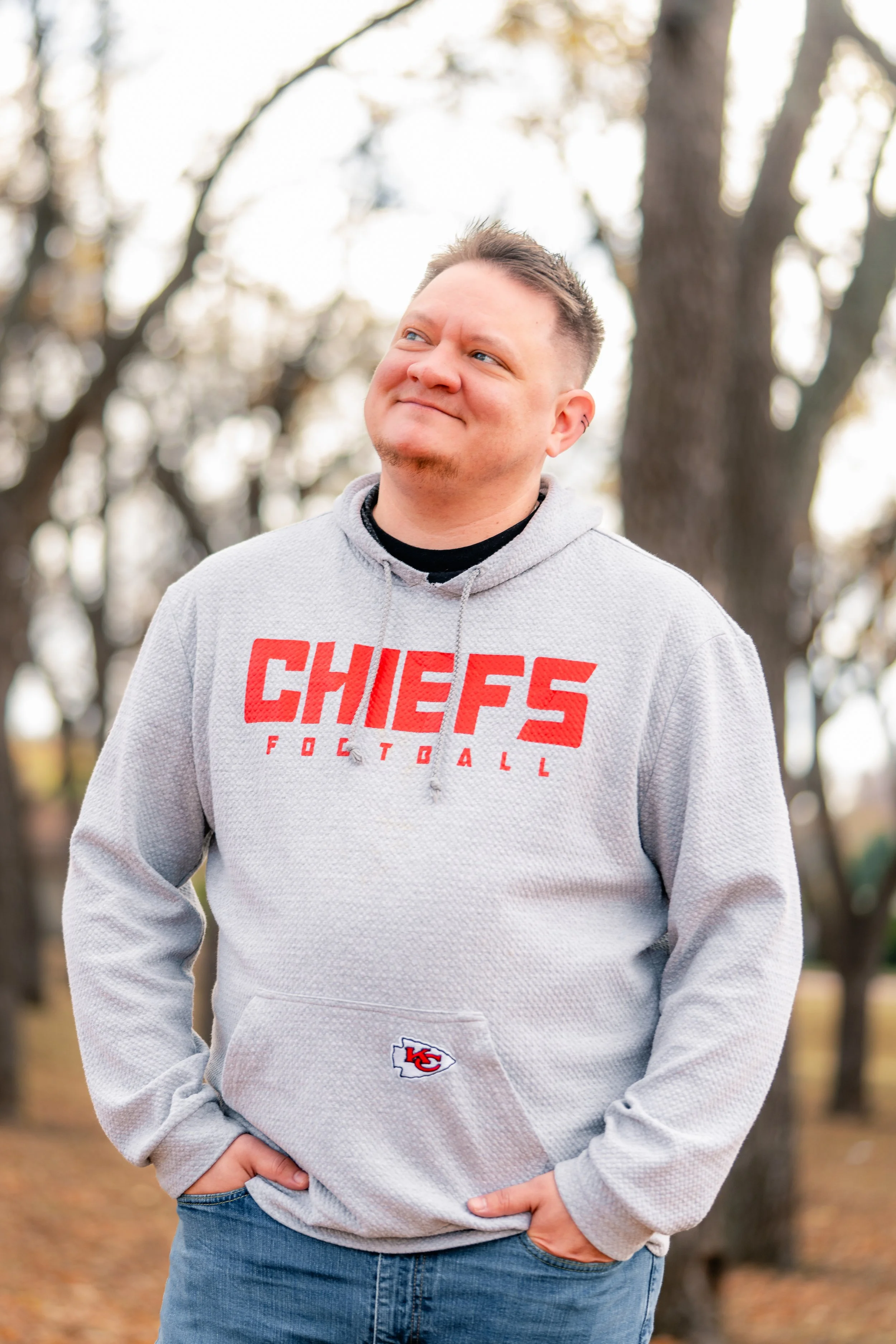
Danny, a mental health counselor specializing in trauma, knows from personal experience the positive impact a supportive person can have on an LGBTQ2S+ person’s life.
“We are social creatures and thrive with strong supportive attachments. So, one of the main factors if someone develops PTSD is their perceived support. Do they feel supported and not isolated or alone? When we feel seen, heard, and valued, we thrive. We feel that even when bad things happen in life, it will be okay because we are not alone, and people will help us.”
He explains further that kids are going to look to the adults in their lives to protect them, and if they don’t have anyone protecting them, they will feel helpless, which leads to PTSD and depression. This danger is why it’s so important to Danny that people become educated about LGBTQ2S+ people, particularly youth.
When he was a teenager, that supportive person was his older sister. She was the first to approach Danny about his gender identity and made it clear that she was there for him.
“My sister’s had my back from day one, but in that moment (coming out to her), having her just be like, “Danny, out of the 1,000 words I could use to describe you, only one has changed.” I just felt such relief. And it was the first time that I felt actual acceptance. And I love that moment between us.”
His sister was the one who boldly stood up for him in the early days of his transition, the one who took the time to educate herself about trans people, and the one who always checked in on him.
“I had that person, and if I didn’t, I know I wouldn't be here. So, if I can be that person or even connect that person with somebody, I'm there 100%.”
Danny has always been drawn to a life of service and guidance. His Midwestern upbringing was deeply rooted in the Lutheran church, and he was very involved in his faith. So, he felt it was a logical next step to become a pastor.
“I love the thought of providing people with hope, joy, peace, or comfort through the word of God,” he says.
However, the older he got, the more disillusioned he became with the way the church, and notably, fellow church-goers, treated those who needed compassion and love the most.
“When I would hear the mean, hateful things people would say about people that were different in any way, I felt very conflicted. How can someone who says they follow the word of God be so mean and feel justified in doing so?”
Multiple heartbreaking family tragedies had Danny questioning why God would allow terrible things to happen, and he lost faith in a higher power. Plus, he knew that being transgender would create barriers to acceptance within his church.
“I became very frustrated with how people justified hate with their religion. Mental health, on the other hand, is based on science instead of just “blind faith. It provided a more concrete reason why some things happen or why humans behave the way they do.”
Deciding a life as a pastor was probably something he wouldn’t be able to pursue, at least within his own church, he turned to getting his training as a counselor, specializing in helping people with trauma. He saw the powerful benefits of counseling on people’s lives, and he wanted to be a trusted ear for someone feeling the same way he had felt when looking for support.
He wanted to take the traumatic experiences he lived through and use them to help others. He explains that often when we think of trauma, we think of a singular event. But there’s also complex trauma which can be the negative beliefs we have about ourselves, reinforced by messaging and behaviors from others.
“So as a trans man in the Midwest, having strong parents that abide by gender roles, and then being in the church as trans and not fitting in, or not feeling like I was in the right body or comfortable with myself... I developed this kind of negative belief that “I'm broken,” and throughout my life, that was kind of reinforced.”
The struggles Danny went through played a part in equipping him with the very skills that are needed to be a compassionate mental health provider to those who have felt alone in their struggles.
. . .
Read the rest of Danny’s story by purchasing your own copy of Becoming Visible Magazine