PRONOUNS: SHE/HER | TOWN SIZE: UNDER 15,000
“I came into school and was a total laughing stock. It was really damaging. There were aspects of femininity that I wanted to embody, but I became really afraid of that. In elementary school, I got a lot of shame because I wanted to hug my friends. And they were like, ‘never do that, that’s gay.”
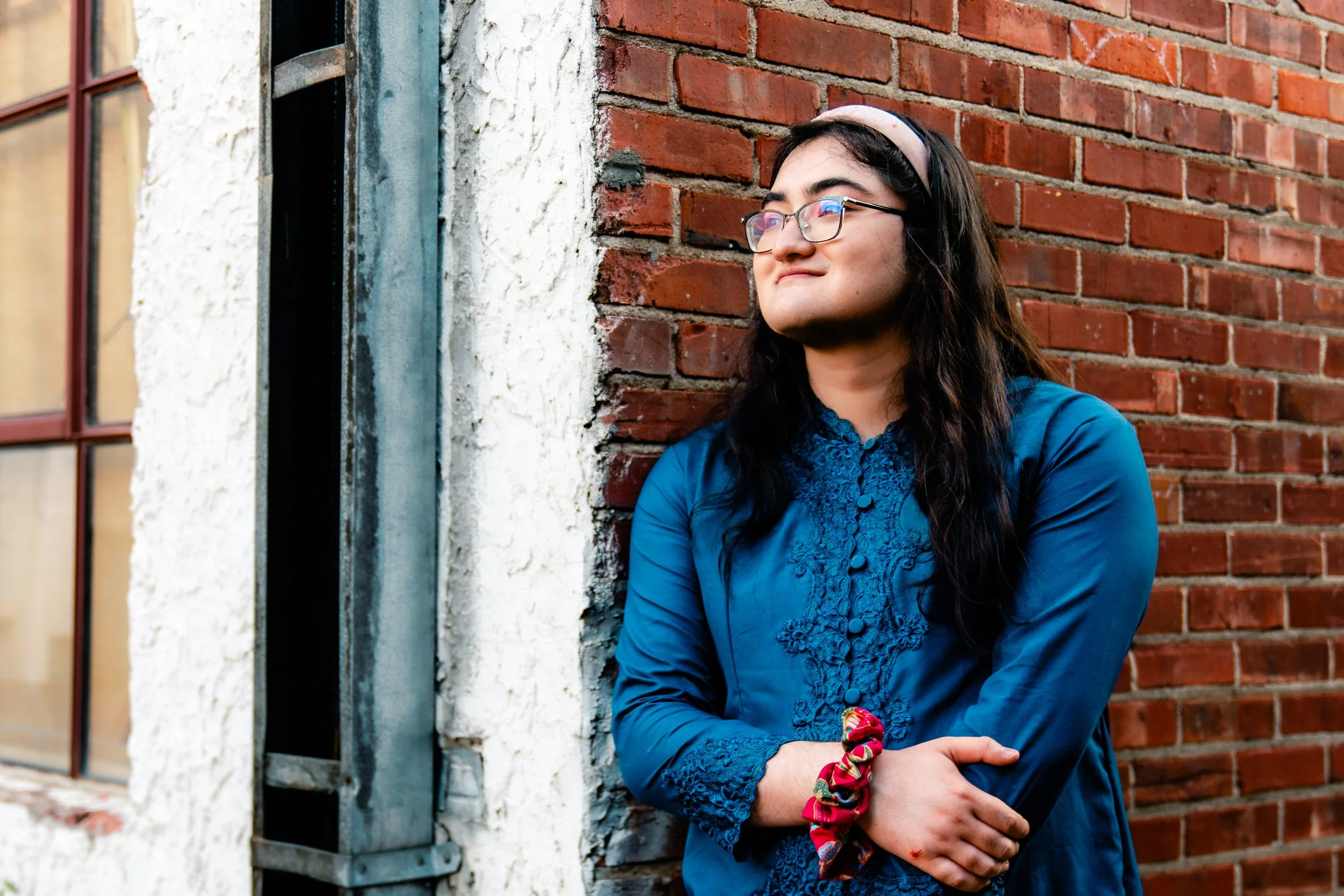
Among the busy shopping district of Malacca, intricately embroidered fabrics in shades of bright neon to soft pastels line the storefronts–a world of color that had once seemed out of reach to Eden. There are Baju Melayu and sampings for men: a long-sleeved shirt and short sarong wrapped around trousers, and the kebaya and sarong for women: a blouse secured with a broach and a long piece of cloth wrapped around the waist. The choice had always been clear to Eden, though it wasn’t until three years ago that she could make it for herself.
As a Malaysian trans woman born, raised, and living in South Dakota, she has fought to defy gender norms and racial stereotypes from a young age, always seeking to uncover the kaleidoscope of truths that exist in the symbiosis of her intersectional identity. This journey began around age three when her auntie painted her nails for the first time. It was a bright shade of red and a memory that stuck. But when she went to pre-K the next day, the experience quickly soured.
“I came into school and was a total laughing stock. It was really damaging. There were aspects of femininity that I wanted to embody, but I became really afraid of that. In elementary school, I got a lot of shame because I wanted to hug my friends. And they were like, ‘never do that, that’s gay.”
She went to elementary school in Rapid City, and despite having to hide her transness, being Asian was an identity she couldn’t conceal in a city that is predominantly white, with a significant Indigenous minority and few Asian people. Already faced with the stigma of being Malaysian and having any form of feminine expression heavily scrutinized from a young age, even the thought of transitioning wasn’t an option for Eden until high school.
In the eighth grade, she moved to Vermillion. Being a liberal-leaning college town, she found it to be more accepting in some ways. “It was a big shock at first. I was given more space to be more feminine, but I still had this mindset from Rapid City that I couldn’t be like that. So, it was a really weird couple of years of transition. But then I was able to have a lot more female friendships in my life.”
Her best friend in high school was another queer woman, which was an important space for her to start expressing the femininity that was shamed in elementary and middle school. However, she still identified as a gay man, though she knew she was a trans woman. One of her friends was Mormon, so she faced additional pressure to hide these aspects of herself. “I was outed as gay to a decent amount of people, but I knew that if I was out more, and especially out as trans, certain parts of my life would become really difficult. I was really just afraid to talk about it, confront it. And even though Vermillion was much more accepting, the only out trans person was bullied mercilessly.”
For context, Eden was in school in 2016 when Republican lawmakers in South Dakota introduced the first bathroom bill in the country. These first six anti-trans bills introduced in the state in 2015-2016, followed by dozens across the country in the last decade, were a wildfire that has further inflamed transphobia in classrooms and communities.
“I sometimes think that [Republican lawmakers] would rather just have us wear a pink triangle if you’re trans so they can identify us.” (For those who don’t know, the pink triangle was a cloth patch put on queer people in Nazi concentration camps to identify them, akin to the use of the Star of David for Jewish people). She aptly states that Republican legislators are trying to uphold the ideal of a cisgender, straight nuclear family when we should be moving towards community instead of isolation from one another. Something that lawmakers and advocates can do for the trans community is encourage larger networks of support for young people, as monopolizing a child’s support system can be damaging and isolating.
“Something we've lost in our modern age is larger systems of support. Introducing ways for children to have many adults that they feel safe talking to, who can give them a variety of different experiences and outlooks, is really important. Having other people in their life like cousins, aunts, trusted people in the community, or teachers they feel they can talk to is really important and will make kids feel less alone.”
Finding support systems, including high school and college friendships and in therapy, was integral for Eden to unlearn the transphobia she had experienced since childhood and finally begin her transition. The first person she came out to as trans was her therapist. “I would talk to my therapist about how I felt like I was trans. And she was like, ‘So, when are you going to transition?’ And I was like, ‘Oh, I could just do that, huh? I don’t just have to talk about it for like, years.’ I was like, ‘I can just do this. I’m free.’ There weren’t the same pressures on me.”
. . .
Read the rest of Eden’s story by purchasing your own copy of Becoming Visible Magazine