PRONOUNS: SHE/HER | TOWN SIZE: OVER 200,000
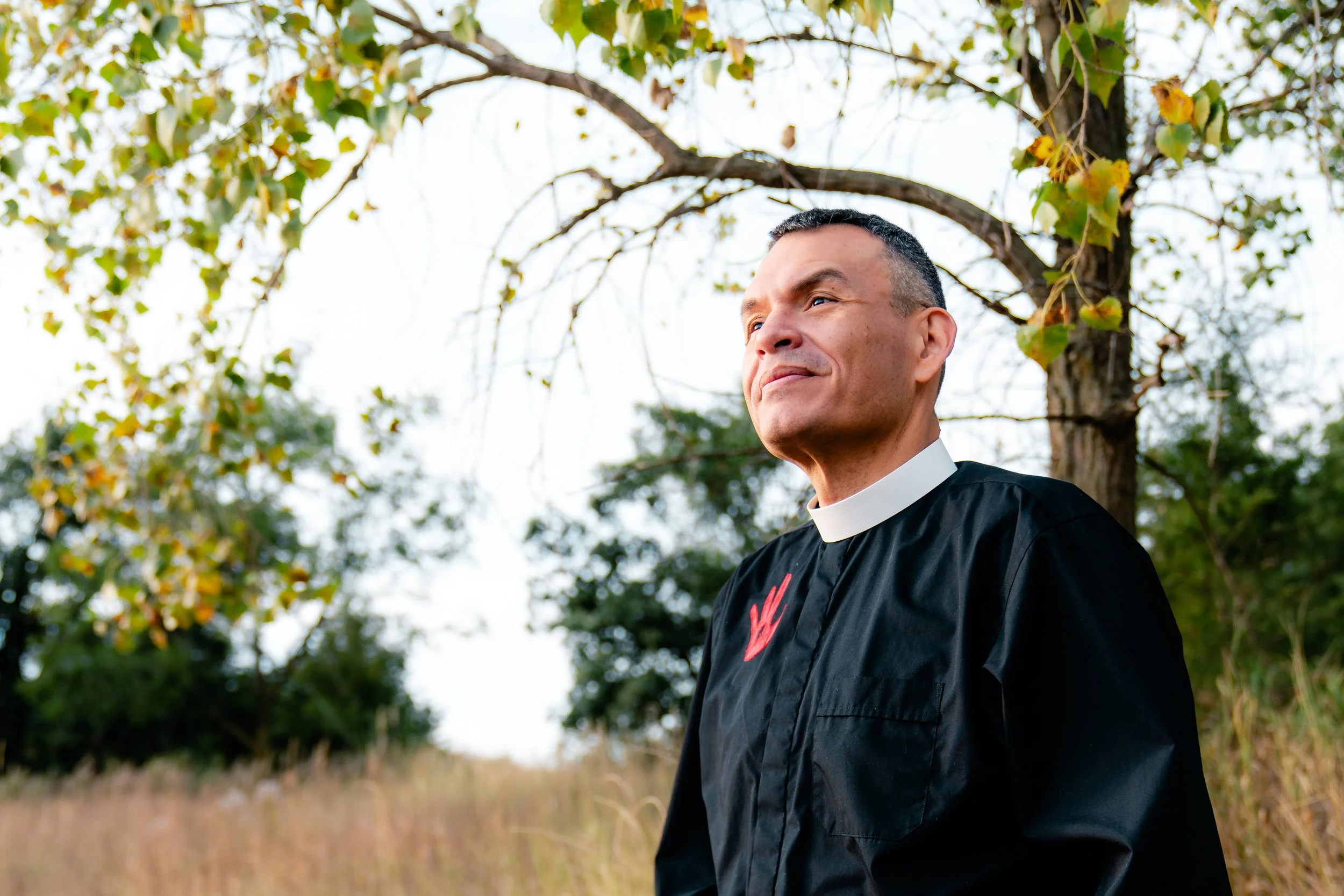
“For me, it’s about being in the liminal space and the traditional spiritual and social role that we’re called to live in as Two-Spirit people. We were called to walk between the masculine and the feminine and the natural and the supernatural. And serve our community in all sorts of different ways, whatever it might be, to heal and reconcile all of those things.”
Reverend Shaneequa Brokenleg moves simultaneously within two worlds: one of Episcopalian Priest and the other of winkte (pronounced wink-tay), the Lakota word for a Two-Spirit person.
“For me, it's about being in the liminal space and the traditional spiritual and social role that we’re called to live in as Two-Spirit people. We were called to walk between the masculine and the feminine and the natural and the supernatural. And serve our community in all sorts of different ways, whatever it might be, to heal and reconcile all of those things.”
The Lakota culture has three genders: male, female, and winkte or bloka win. Reverend Brokenleg wants to help people understand the value of Two-Spirit people in the context of Lakota culture and the history of LGBTQ2S+ people.
“Two-Spirit people, traditionally in Lakota culture, are sacred people. A community is not considered whole unless it has men or women who heal with medicine, men or women who heal with ceremony, political and social leaders, strategic and military leaders, and Two-Spirit people or winkte. And so, we are part of a whole community, and without us, the community is not considered complete.”
Traditionally, winkte were held in high status in their communities and valued for their insight and guidance. Their role includes prayers at sacred times, especially during transitions. Their role also includes being a wise ear to listen, a mediator, or just being there to support the community in whatever way they are needed.
“Each tribe has their own word. And some tribes have multiple genders like mine. We either have three or four, depending on how you count, but some tribes have as many as six. And they all have similar roles,” Brokenleg explains.
During colonization, there was a violent mission to destroy the traditions and cultural beliefs of Indigenous people. Traditional Lakota spirituality was replaced by Christianity, frequently by force.
“They would often hurt or harm Two-Spirit people because then they can get rid of this thing that they saw as sinful, the traditional [Lakota] spirituality. [The church] took our land and our children and our culture and our language and our minerals and our resources and water.”
The mission to eliminate Two-Spirit people had a goal that was two-fold. Not only was it a quest to suppress traditional Indigenous spirituality, but the plan also eliminated the LGTBQ2S+ people from the community.
During this time, traditional spirituality and celebrating Two-Spirit members were hidden, resulting in a loss of cultural knowledge and understanding.
During the relocation era, Two-Spirit folks came together and made an effort to preserve their cultural and spiritual identities. They understood that each tribe had these roles but had different names for them. So, they coined the term Two-Spirit, an umbrella term meaning a person has the spirit of both masculine and feminine. They began the work of reintegrating the traditional role of the Two-Spirit people into modern-day tribal communities and reeducating tribal members about their cultural importance.
Growing up on the Rosebud Reservation, Brokenleg’s grandparents recognized something in Shaneequa that she didn’t yet recognize in herself.
“I think they knew way before [that I was winkte], and they told me stories about Two-Spirit people. They talked to me about their roles in society and the things they do, and how they live their life. I just assumed they told all my cousins the same stories, but they didn't. And so obviously, they knew before I knew.”
Her grandparents also introduced her to other people in the community that would eventually aide her in her ascent to her spiritual and cultural role. Shaneequa feels fortunate that her family had an understanding not only of the culture of Christianity but also a deep understanding of the culture of Lakota spirituality. Shaneequa’s grandfather was also an Episcopalian priest.
. . .
Read the rest of Shaneequa’s story by purchasing your own copy of Becoming Visible Magazine