PRONOUNS: SHE/HER | TOWN SIZE: UNDER 80,000
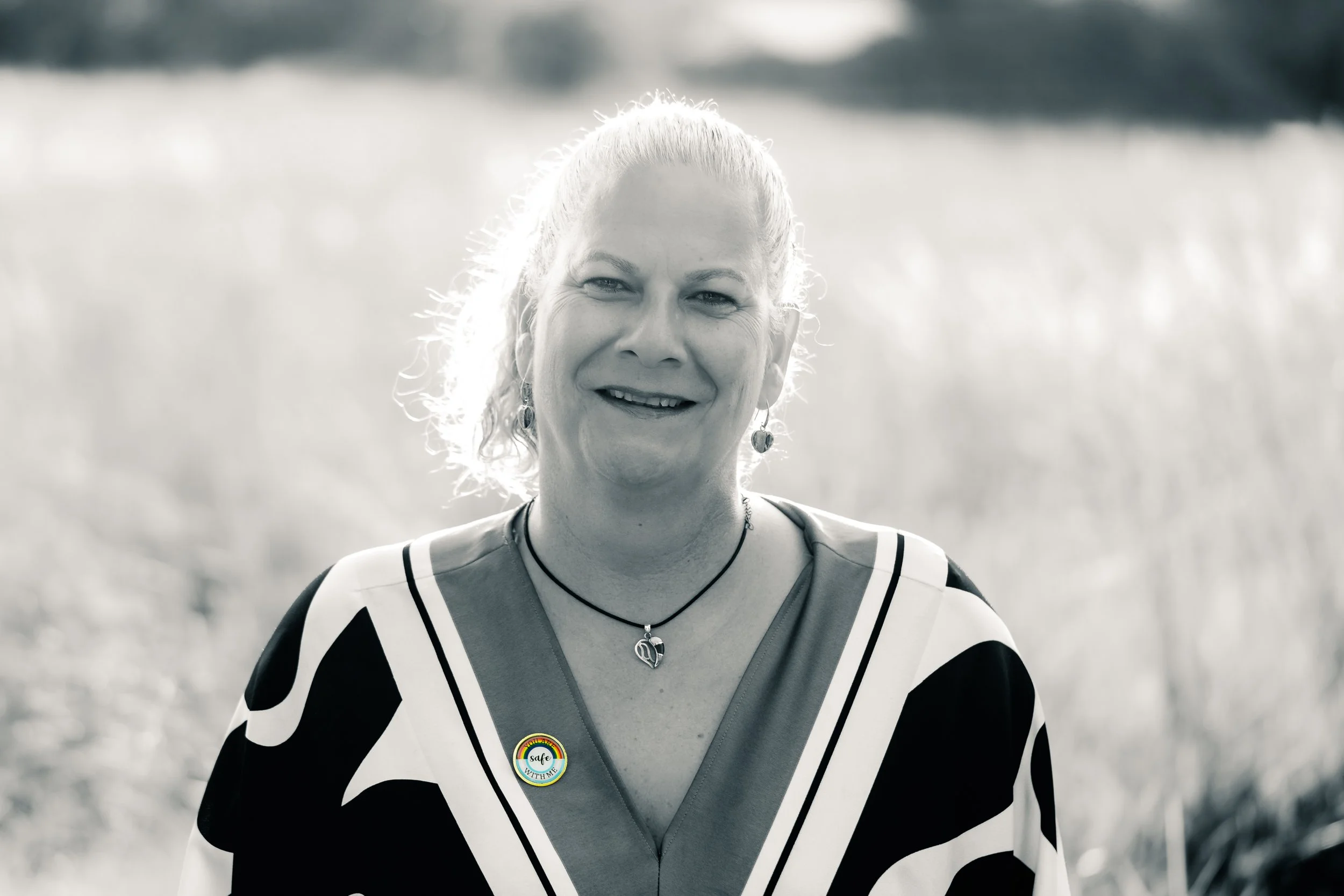
“We have these opportunities, you know, by talking to people and being calm. The number of conversations that I’ve been able to have with people, and they’ve been like, ‘Oh, I didn’t understand. You’re the first trans person I’ve ever met, you’ve totally changed my mind.’ That’s why it’s so important to have those conversations.”
It may have been her tough childhood with an abusive dad.
Or maybe it was her eight years in the Marines, including time spent deployed to the Persian Gulf.
Or maybe it was her six years living in Namibia helping teens build a better life for themselves.
Or perhaps it was her time campaigning as the first openly transgender candidate for the South Dakota House of Representatives.
Whatever the experiences that helped build the resolve of Toni Diamond, when she sees a job that needs to be done, she’s not afraid to do the work.
Diamond, the current president of the Black Hills Center for Equality, didn’t always consider herself a confident achiever. But over time, she grew to know that she had a voice and she should use it.
“We have these opportunities, you know, by talking to people and being calm. The number of conversations that I've been able to have with people, and they’ve been like, 'Oh, I didn't understand. You’re the first trans person I’ve ever met, you've totally changed my mind.' That's why it's so important to have those conversations.”
She adds, “We all have a choice, I’m choosing to be an advocate. I’m choosing to put myself out there, and I know that not everybody can.”
Toni credits her experiences doing outreach work while living in Namibia with helping her bridge the divides she encounters here in South Dakota.
She helped build an organization that got kids off the street by teaching them the ins and outs of running a café. They initially thought they were just helping the kids, but eventually realized they were helping the community as a whole. With so many factions of different tribes and belief systems, along with people from various economic backgrounds, there was a lot of work to be done to get the different groups to communicate and learn to value each other and their differences.
So, it started with a basic lesson they would teach the kids: Take away all these differences and see we’re all equal.
“Love each other, respect each other, we’re all the same, nobody is better than another. It infected the community. It started to spread, and other businesses and people started being nicer to each other. Before, it was segregated to white, black, rich, poor. But when we left, they were sitting, interacting together. That wasn’t the goal, but when they helped remove the barriers, the people got along so much better.”
Toni hopes that the positive outcomes she had working to bridge divides with youth in Namibia are replicated here regarding the barriers the LGBTQ2S+ community faces in South Dakota. And she’s not afraid to have tough conversations to keep progress moving forward.
“When you help break down those barriers, it’s an amazing thing.”
Toni recounts an experience when a man approached her at a bar while she was out with two friends. He was sizing her up and accusing her of “not being like the other girls.”
He asked Toni with what appeared to be an air of distrust, “What are you?” Toni knew that this was an opportunity for change.
“I could have said 'piss off,' but then I would have reinforced his belief. I have to do this. If I’m going to help tear down these walls and bring down these barriers, I need to step forward.”
After a short talk, the man’s outlook was changed.
“We talked for a good 20 minutes, and at the end of that conversation, he said, 'You are a woman. Thank you for having a conversation.’”
“Nobody got belligerent. And if you take the time and be willing to have the conversation, initially it can be scary, but if we don’t have the conversation, we’re never going to break those walls down.”
Toni, the oldest of three children, was raised primarily by her mother after her parents divorced when she was young. Her father was emotionally and physically abusive, and there was no room for error growing up. And there was no room to deviate from his idea of perfection.
“The first time I knew [I was transgender], I think I was seven or eight. My mother dressed me up as a girl for Halloween. I remember vividly that this was the first time I felt like myself.”
Toni remembers her mom happily calling her “daughter,” and she was devastated when the day was over. She had to remove the female clothing and makeup.
. . .
Read the rest of Toni’s story by purchasing your own copy of Becoming Visible Magazine